Thursday, August 25, 2016

bienvenida, welcome to our world


bienvenida, welcome to our world


i saw his eyes flitting from left to right, his left hand holding the left knee of the girl beside him in the jeep. are those the eyes of an addict, searching, alert for any intrusion in his expression of love?

Nakita ko ang mga malilikot niyang mata, pakaliwa, pakanan, habang nakahawak ang kanyang kaliwang kamay sa kaliwang tuhod ng babaeng katabi niya sa jeep. Yun ba ang mga mata ng isang adik, naghahanap, alerto sa paglaban sa kung sinumang makikialam sa kanyang pag-ibig?

i saw the body of a teenager sprawled on the road, beside the gutter. blood spilt around and people approached it, even quietly, inquisitively. “what did he die of? or why was he shot dead? who shot him dead? they said he was an addict, maybe snatcher. did a co-criminal shoot him? who? why?”

Nakita ko ang katawan ng isang teenager sa kalye, malapit sa kanal. Tumutulo, kumakalat ang dugo sa kalye. Ang mga tao papalapit, nagtatanong, “ano'ng kinamatay niya? Bakit siya binaril at pinatay? Sino ang pumatay sa kanya. Sabi nila isa raw siyang marahil adik o snatser. Isa bang kakosa ang pumatay sa kanya?


souls moving about in the cemetery, uneasy, seemingly wanting to be physically present. i sensed the soul of a body riddled with bullets; another soul of an elderly, with bullet-holes in his head. why so many dead? why, wherefore are they going? can they come back if they would like to? who will receive them? who will be happy to meet, to kiss and embrace them again?

Maraming kaluluwa ang umiikut-ikot sa sementeryo, hindi mapakali; nagnanais waring mabuhay muli. Naramdaman ko ang kaluluwa ng isang katawan na tadtad ng bala; isang kaluluwa ng nakatatanda at maraming tama ng bala sa ulo. Bakit napakaraming patay? Saan sila papunta? Makababalik pa ba sila kung nais nila? Sino ang tatanggap sa kanila? Sino ang maliligayahang makita silang muli, mahagkan, mayakap?

a child's eyes ask, “inay, bakit nakahiga si tatay?” “natutulog lamang siya. pag gising niya. magkakasama na rin tayo.”

Nagtatanong ang mga mata ng isang bata, “Inay, bakit nakahiga si tatay?” “natutulog lamang siya. Pag gising niya, magkakasama na rin tayo.”

a mother is weeping, “wala na, wala ng tutulong sa pag-akay sa akin pagtanda ko.  kinuha na siya ng Diyos. kailangan ko nang magtulos ng kandila.”

Isang ina ang lumuluha. “wala na, wala ng tutulong sa pag-akay sa akin pagtanda ko. Kinuha na siya ng Diyos. Kailangan ko nang magtulos ng kandila.” 

wait, a hearse is passing by. it is a grandmother's entry to a second life so the franciscan priest had said in his homily. she lived a full life, so her relatives say, saving the poor from crippling, debilitating diseases of the lungs caused by dark smoke, by not eating enough to nourish the body. not only did she cure for free; she also sang songs to the world, speaking of being in love only once in a lifetime. ah, she bears roots in an era when to be gentle, to feel love, whether woman or man, was a mark of decency, a tendency to be human and immortal at the same time.

Hintay, hintay. Dumaraan ang isang karo. Isang lola pumapasok sa sa pangalawang buhay niya, ayon sa isang paring Franciscano sa kanyang sermon. Nabuhay siya ng buong giting, ayon sa kanyang mga kamag-anak,sinasalba ang mahihirap sa nakalulusaw, nakalulumpong sakit sa baga dulot ng maitim na usok, dulot ng kawalan ng makaing masustansiya para lumakas at lumusog ang katawan. Hindi lamang siya nanggamot; umawit din siya ng mga awit para sa mundo, mga awit na nagtataglay ng madamdaming umiibig ng minsan lamang sa buhay. Ah, ang buhay niya ay nakaugat sa isang panahong kung saan ang pagiging maginoo, ang pag-ibig sa kapwa ay tanda ng pagiging tao, pagiging marangal, isang tendencia para sabay na maging tao at maging buhay magpakailanman.  

why should memories of love mingle with scenes of death? why should tears over death overpower surging feelings of love? why can we not see love as it is – a deep feeling for the life of another, for the continued existence of another?

Bakit kailangang maghalo ang mga alaala ng pag-ibig sa mga larawan ng pagkamatay? Bakit kinakailangang maigpawan ng mga luha dahil sa pagkamatay ang nag-uusbong na damdamin ng pag-ibig? Bakit di natin makita ang pag-ibig bilang isang marubdob na damdamin para sa buhay ng isa pang nilalang, para sa walang hanggang pagkabuhay ng isa pang kapwa?

why should we see death as the end of life? is there not life after we breathe our last? is there no love as well? should love and death be present together in our lives to remind us of our mortality?

Bakit kailangang tingnan natin ang kamatayan bilang isang katapusan ng buhay? Wala na bang buhay sa huling  hugot ng hininga? Wala na rin bang pag-ibig yaon? Kinakailangang

bang magsabay ang pag-ibig at kamatayan sa ating buhay upang maalala nating parating hiram lamang ang ating pagparito sa mundo?

what is being mortal? it is knowing that we are beings borne of God's impatience with lack of love being nurtured in its proper surroundings, where everyone nods, smiles, pats the shoulders of a companion and celebrates everyone's presence. ah to see it that way, we are being idealistic.

Ano ang pagiging mortal? Ito ay pagkilala na tayo ay mga nilalang na nabuhay dahil sa pagkainip ng Diyos sa kawalan ng pag-ibig na kinakalinga sa tamang kapaligiran kung saan lahat ay tumatango, ngumingiti, tinatapik ang balikat ng isang kasama at pinagdiriwang ang pagkatao ng lahat.

or maybe love starts with idealism. however, it need not descend to cynicism; nor to end in death. rather, it springs again to shower the fields with roses and lilacs and fragrant sampaguitas that draw everyone to feel and smell human, and to perceive the divine in everyone.

Marahil din, ang pag-ibig ay nagsisimula sa ideyalismo, ang isang mithiing di makakamit ninuman. Nguni't di kailangang humantong ito sa pagtuya; o kaya'y matapos sa pagkamatay. Dapat ito ay magbubungang muli upang diligan ang parang ng mga rosas, lila at mababangong sampagita na siyang hihila sa lahat upang damhin, samyuin at makita ang dakila sa bawa't isa. Ang pag-ibig ay ang pagkakaroon ng damdaming hindi masapawan ang isa, maisahan.


- wilhelmina, 25 august 2016, kaps


PINTURA: Noche De Los Muertos


By: Dave Sanchez Item #: 8574487 all posters

Thursday, August 18, 2016

ON BECOMING AN OLYMPIC ATHLETE

Artemis the Huntress, Known as the "Diana of Versailles"Image result for Greek olympic sculpturesGreek sculpture, archer 

 Folks, it is not easy to be an Olympic medallist but there are some great insights we can derive from the news about how to be one:

1. Cultivate your intelligence. Not all sporty people are all brawn. They have brains. They can abstract from their experiences. For example, one equestrianne said that she focuses -- puts her mind to what she is doing at the time. Another one said, he does not think of tomorrow at all but what he can accomplish at the moment.                                                                             Artemis, Goddess of the Hunt

In other words, CONCENTRATE on practice, on training and on the game itself. Do not allow anything to distract you. Greek sulpture, wrestlers

2. Find a group of rah-rah supporters. How did Ms. H Diaz win? She had the battalions of the Philippine Air Force rooting for her. In  other words, her fans included the sergeants at arms, the privates and the generals. Can you beat that? And they took flight up in the air. So the rah-rah started from the ground and reached up to the skies. 

That's how big her support was which made her land in the silver medal category. 

3. Take care of your body. But be ready for the worst in case something happens to you. The equestrianne broke her collar bone but she said that she did not think of it at all when she was competing in the games. That is what you call mind over matter. 
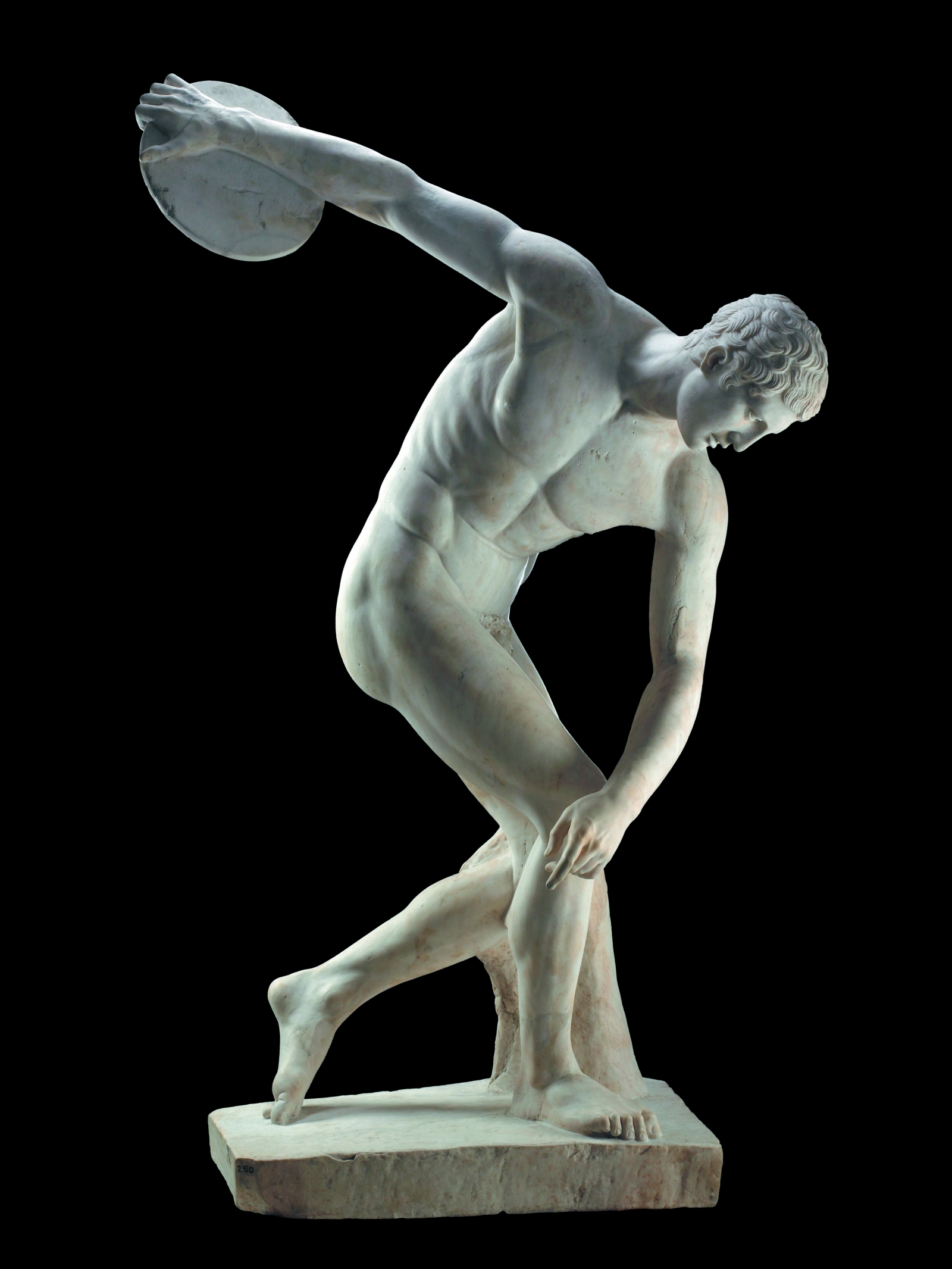
 Olympic sculpture discus thrower
There may be some things you cannot change at the moment but then you have to face up to the challenge to overcome your opponents in the Olympic games. And so concentrate again, hard. 

4. Cultivate meditation or yoga -- which makes you focus your mind on one thing at a time. You can apply that to your practices and the game itself.  Meditation makes you ignore your surroundings and just focus on breathing in and out. So while swimming or running or playing table tennis, you just focus on the act itself. 

5. Read a lot about champions. Analyze their philosophy in life. Check how they reached the top; how they started, how they built up their skills, and who are the influential people in their lives. 

6. Keep a record of your practices and mark down your achievements. Check if you are improving and if not, do not feel ashamed to ask your mentor. Get a good mentor, one who believes in your capacity to achieve and who does not make any belittling remarks on you. 

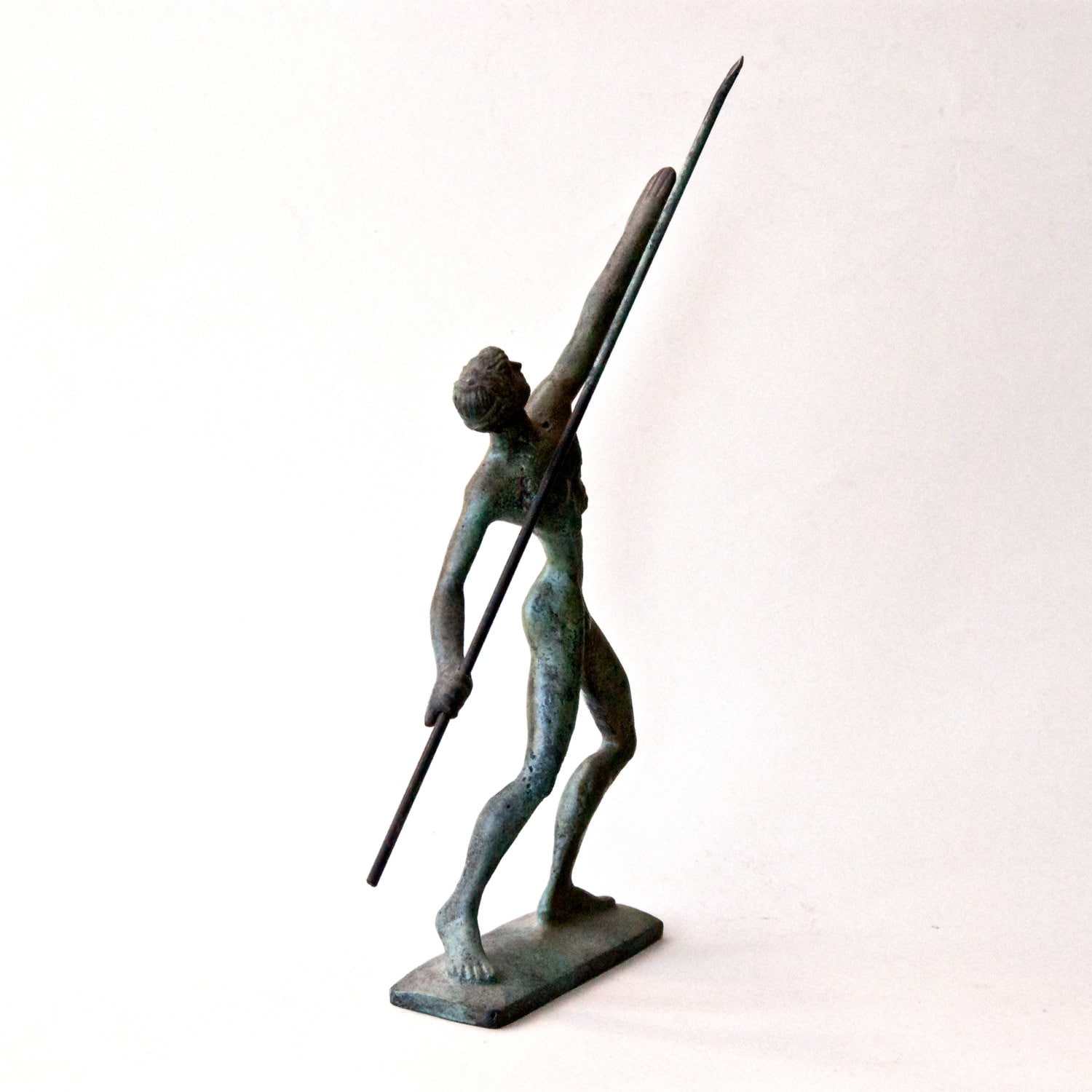
Javelin Thrower, Greek sculpture
7. Before the event, listen to many inspiring words of believing in yourself. Avoid people who will put you down. Do not think of problems. Think positive. 

8. Girls and women should get proper training from coaches who are gender sensitive. It is a miracle that despite the all-male surroundings above her, Ms. Diaz was able to achieve that which is very elusive to many athletes. As members of the Female Sex, let us cultivate good vibes, read a lot about women champions and protect ourselves psychologically, intellectually, and emotionally.

Athena, Greek Goddess of Courage
9. Pray, pray hard to all the Gods, Goddesses and Saints that you know. 

Finally, the government should change the list of officials in the Philippine Olympic Committee should they not get at least two athletes to bring home medals. We need to be harsh on the officials so that they will do their job properly and that is -- motivate our athletes to perform  excellently.

Saturday, August 13, 2016

BAHA, BAHA, TAUN-TAON NANINIRA


Hokusai - Beneath the Great Wave off Kanagawa

  • UPANG MAINTINDIHAN NATIN KUNG BAKIT BUMABAHA AT PAULIT-ULIT NA DUMARATING, TAUN-TAON, AT LAKSA-LAKSANG KAGAMITAN ANG NAPIPINSALA; MILYUN-MILYONG PISONG IMPRASTRAKTURA ANG NASISIRA AT DAAN-DAAN ANG MGA TAO NAPEPERHUWISYO 

  • MGA DAHILAN NG PAGBAHA 

  • 1. Kawalan ng pananim at mga puno;
2. Mga batuhan sa ilalim ng lupa. Ito ay maaaring dahilan sa kongkretong pundasyon ng mga matataas na gusali;

3.  Baradong mga daanan ng tubig sa ilog kung kaya't umaapaw ang tubig. Ang pagbara ay maaaring dahil sa maling pamamaraan ng pagtapon ng mga basura; naiipon na lupa sa ilalim dahil sa pagdausdos ng lupa mula sa gilid ng ilog; 
1-3 AYON.SA: http://www.bbc.co.uk/schools/gcsebitesize/geography/water_rivers/river_flooding_management_rev1.shtml; at 

4. ANG PINAKAMALAKING 


DAHILAN: Kawalan ng tapat na 


paglutas ng problema sa pagbaha 


ng department of public works, lalo

na ng national capital region. 

PAANO NATING MAIIWASAN ANG BAHA?

1. Bawa't barangay na nakaharap sa ilog ay dapat may bantay. Pagbawalan ang pagtatapon sa ilog;

2. Palalimin ang lahat ng creeks at ilog sa MetroManila ng 100 metro kalalim;

3. Maglagay ng screen o chicken wire na maliliit ang butas sa bawa't ilalim ng tulay upang masalo ang lahat ng mga papel, styrofoam, plastic, bakal, etsetera;

4. Patawan ng parusa ang mga taong nagtatapon ng basura sa mga creeks at ilog;

5. Magbigay ng pabuya -- limang milyong piso, kada ika-6 na buwan sa mga barangay na A-1 ang kalinisan, sa kalsada at sa mga ilog na karatig nito;

6. Bigyan ng pabuya ang buong mga empleyado ng DPW NCR regional office na ang nasasakupan ay di binabaha: P10 milyon. Gayahin ito sa lahat ng mga rehyon; 

7. Magbigay ng kontest sa taumbayan. Humiling ng mga suhestiyon kung paanong malulutas ang pagbaha. Magbigay ng mga papremyo: una -- P3M; pangalawa: P2M at pantatlo: P1M; 

8. Magkaroon ng patakaran na wala nang itatayong gusali na hihigit pa sa 4 na palapag sa buong NCR; at 

9. Magdasal tayo na mawala na ang lahat ng mga mapamuksang baha at ulan. 

PARA SA MGA STRANDED NA MGA PASAHERO, ilabas lahat ng trak ng Armed Forces of the Philippines at PNP upang tulungan ang taumbayan na makauwi sa kanilang mga tahanan. Gawing awtomatiko ang patakarang ito kapag may ulan. 


SA INGLES: Other info about flooding: 

http://www.bbc.co.uk/schools/gcsebitesize/geography/water_rivers/river_flooding_management_rev1.shtml

  • 1. These are some of the big causes of flooding: 

  • A lack of vegetation or woodland - trees and plants intercept precipitation (ie they catch or drink water). If there is little vegetation in the drainage basin then surface run-off will be high.

  • drainage basin, consisting of mainlyimpermeable rock - this will mean that water cannot percolate through the rock layer, and so will run faster over the surface.

  • A drainage basin in an urban area - these consist largely of impermeable concrete, which encourages overland flow. Drains and sewers take water quickly and directly to the river channel. Houses with sloping roofs further increase the amount of run-off.

Flood management techniques include river engineering, afforestation and planning controls to restrict urban development on floodplains.
2. What Causes Flooding? from: http://www.n-d-a.org/flooding.php
There are many reasons why floods occur, these can be divided into categories of causes. These are flash floods, storm surge, and dam and levee failures.

Flash Floods
These types of flood occur with little or no warning. Flash floods can be deadly due to the rapid rise in water levels and the high flow-velocities of the water. There are factors which contribute to the occurrence of flash floods: rainfall intensity, duration, surface condition and topography. Urban areas are more susceptible to flash floods due to the lack of natural drainage systems and the high amounts of impervious surfaces (concrete, tarmac). These tend to increase the rate of run off into water systems.

Storm Floods
Storm surges inundate coastal margins due to severe onshore winds, often accompanied by low atmospheric pressure and sometimes high tides. Friction between moving air and the water creates drag. Depending on the distance over which this process occurs (fetch) and the velocity of the wind, water can pile up to depths of over 7 metres. Intense, low-pressure systems and hurricanes (tropical cyclones) often cause storm surges. Nine out of ten tropical cyclone fatalities are caused by the storm surge associated with the storm.

Dam and Levee Failures
Dam and levees may be designed to contain a flood at a location on a water way that has a certain probability of a flood occurring in a specific year, i.e. one in every 250 years. If the flood is larger than the one predicted the structure built to contain it will be overtopped and will fail. This causes a sudden burst of water which causes a flash flood downstream. Failed dams and levees can cause catastrophic floods due to the intensive energy involved in the sudden burst of water.


3. FROM:  - http://environment.nationalgeographic.com/environment/natural-disasters/floods-profile/
A flood occurs when water overflows or inundates land that's normally dry. This can happen in a multitude of ways. Most common is when rivers or streams overflow their banks. Excessive rain, a ruptured dam or levee, rapid ice melting in the mountains, or even an unfortunately placed beaver dam can overwhelm a river and send it spreading over the adjacent land, called a floodplain. Coastal flooding occurs when a large storm or tsunami causes the sea to surge inland.
Most floods take hours or even days to develop, giving residents ample time to prepare or evacuate. Others generate quickly and with little warning. These flash floods can be extremely dangerous, instantly turning a babbling brook into a thundering wall of water and sweeping everything in its path downstream.
Disaster experts classify floods according to their likelihood of occurring in a given time period. A hundred-year flood, for example, is an extremely large, destructive event that would theoretically be expected to happen only once every century. But this is a theoretical number. In reality, this classification means there is a one-percent chance that such a flood could happen in any given year. Over recent decades, possibly due to global climate change, hundred-year floods have been occurring worldwide with frightening regularity.
Moving water has awesome destructive power. When a river overflows its banks or the sea drives inland, structures poorly equipped to withstand the water's strength are no match. Bridges, houses, trees, and cars can be picked up and carried off. The erosive force of moving water can drag dirt from under a building's foundation, causing it to crack and tumble.

Painting:  Hokusai - Beneath the Great Wave off Kanagawa (c1829-32). Photograph: Alamy

Tuesday, August 2, 2016

ARE WE REALLY TURNING A NEW LEAF?


"A use of force continuum is a standard that provides law enforcement officers and civilians with guidelines as to how much force may be used against a resisting subject in a given situation."


Do we have rules of engagement at all?

The spate of killings by police of drug suspects, drug pushers, etcetera, has led me to ask, what are the rules of engagement used by our police force when confronting offenders?

How much force should be used against them -- a young as against an adult offender?

When a suspect uses a handgun, should he/she be shot at right away? Is there not a way by which these people may be immobilized without getting killed?

At rallies, the police use tear gas. There are also instances they have used rubber bullets. In Europe, I have read that they could render a rallyist paralyzed for sometime without getting hurt, the legs unable to move. 

For example, that policeman who shot the Hong Kong tourists in a hostage taking drama, could have been immobilized right away as the SWAT soldiers could see him with a telescope on their armalites. They could have shot his hand, or shot him with rubber bullets. 

Shouldn't the police study those methods so as to minimize if not stop the violence outright?

Life seems so cheap nowadays and I would not wonder if that military reservist had gone beyond decency so as to kill a person over a trivial conflict on the road. The series of killings in headlines in print, radio and TV makes life so easy to do away with. 

However, some thinkers have posited the idea that people who feel secure with the support of their families and their communities are not bound to use drugs at all. They rise above the mundane and pursue goals that would enhance their skills and talents. However, since the 70's our Philippine social life has largely been insecure -- fro the time martial law was declared until we handed over our life to a former homemaker who helped restore our democratic rights, to a military man, to a movie artist-turned politician, and later our elections were manipulated to retain the entry of a woman president. In 2010, we hoped that a relative of the homemaker-President would give us good governance, but instead we have a full-scale illegal drugs industry from north to south and the menace is so grave that strong  arm tactics have to be used to stop it. The people realize that it wreaks havoc on our inner souls and so their choice  is now the present regime -- we are run by people of Mindanao -- the Presidency, the Senate and the House of Representatives, including the Philippine National Police. 
Yes we see now that our government is results oriented and that is real change. We can feel the changes occurring day by day. 

However the changes must include socio-cultural programs -- those that will strengthen the feelings of people that we are part of that one big, big organization in the Philippines and that there are no elite or special people who get privileges denied others. Strengthening of our cultural departments and agencies is very much needed now. 

I remember in 1996, when I presented my show, Himig Bayi at the Open Air Auditorium in Luneta, containing 12 self-composed songs, sang by Beth Lorenzana, Deeda Barretto, Rica and Lani Misalucha, the NPDC had a complete video equipment to record the event. And I was able to get a copy of the show, edited by Gie and Morris. But now, nothing. Recording is done by relatives. NPDC budget for the shows have been cut back and yet through all these years we know that millions of pesos have been pocketed in the name of the PDAF. 

However, I am not saying that we should stop the attacks against the drug lords and the like. I like our so-called  "turning a new leaf." However, I would like the rules of engagement to be more humane, more caring of people's lives. I want more people to live longer, to realize their mistakes and then turn a new leaf as their second lives matter most. Who knows if they would turn out to be a Picasso painter, an Abdulmari Imao sculptor par excellence, a Nureyevsky or Lisa Macuja ballet dancer, or a Placido Domingo tenor later on? We'll never know unless we give them a second chance. After all, we are  just humans and could commit mistakes sometime in our life. Sure life is short but let us not make it shorter for other people.  


Painting: Guernica by Picasso 


Friday, July 29, 2016

DILG SECRETARY ISMAEL SUENO, KINDLY MAKE US MORE MOBILE


What is mobility? it is that capacity to move about, to be always on the go. without any hindrance. It is being able to shift one's location in a jiffy. 

The MRT nor the LRT, nor the PNR does not provide that mobility. We are hampered by their unchanged or updated old and dilapidate parts as well as the lack of spare parts to replace them. When one is dealing with the government, we can almost always expect the delays in transporting people, goods or services through the use  of these transport facilities. 

Since we cannot solve this problem on a citywide nor a national scale, let us concentrate on the barangay. Each barangay has more than a kilometer in diameter. For example, in our barangay, it takes me 500 steps from our house to that point where I can get a public transport. That is about 15 minutes of walking briskly. If I do it lackadasically, I could reach the loading point in 700 steps. 

Meanwhile, our barangay has many shutttle jeeps that ferry officers to deliver, pick up a message, etcetera. I tried hailing one but the driver was in a hurry to go back to the office, which is very near the loading point. The jeep can carry 14 passengers and the driver had only one passenger in front. I did not bother about it because I am used to psyching myself up -- "God does not close one door without opening another," I had told myself. 

Seriously though now, I would propose to the new DILG Secretary to make each barangay provide a shuttle jeep that would carry residents from one point to the other, around the place. Ayala Center has those e-jeepneys which go around it for a fare of P8.00 and 20% less for senior citizens. Ateneo de Manila University in Katipunan provides a shuttle also and for free. 

I don't see the reason why the barangay cannot provide that facility. We have many senior citizens I am sure who want to be able to go to the commerial centers which are found just near the barangay. Yet are too hard up to afford the fares. 

Right now, tricycles are the main transport vehicle. Each ride to the end of the barangay where one can get a ride to Quiapo, to Cubao, or to Divisoria, charge P20 oer oerson. Back to the house that would be another P20.00 So all in all in a day's time, we are spending P40 per day x thirty days and that would amount to P1,200.00 per month. In a year's time, that would be P12,000.00 + 2,400 or P14,400.00. wow! That is already a big sum which we could use to buy us a meal for 144 days or four months at P100 per meal, that is if you have a big meal only once a day. 

The problem is that it is the Quezon City Council which is in control of the fares that the tricycles charge and kahit na magngangawa kami sa barangay office, walang mangyayari pa rin.

And so here is what our first request to the DILG Secretary Ismael Sueno, kindly make us more mobile in our barangay, sans expensive transport fares or a free or almost free shuttle jeep. 

A blessed day to you and your new government family. 


WHAT THE CONSTITUTION SAYS


  THE PHILIPPINE CONSTITUTION 

       STATE POLICY Section 17

   The State shall give priority to education, 

science, technology, 


               ARTS, CULTURE

and sports to foster patriotism, nationalism, 

accelerate social progress and promote total 

liberation and development. 


Mabini's  Programa Constitucional dela Republica Filipina 

(The Constitutional Program of the Philippine Republic, 1898) 
became instrumental in the drafting of what would eventually
be known as the Malolos Constitution.

Tuesday, July 26, 2016

ARE CULTURE AND THE ARTS IN THE AGENDA?

By Wilhelmina S. Orozco

Since the nienties, I have been going to the Open Air Auditorium in Luneta and most of the time, I come out thrilled by the presentations there. Tonight, July 25, I watched the performance after 3 decades of existence of the Majestic Band of Muntinglupa City. Composed of more than 40 instrumentalists, with a tenor to boot, the Band boasts of the Bacarra children of Emmanuel Bacarra, founder of the Band way back in 1993, as conductors,  Michael and Mae very able musicians. Mae follows the footsteps of Tita King who also conducted there before. 
Muses

I want to focus on the interaction of the performers with the audience. The sequence of the program is that a host talks about it as a whole, and then introduces the Band. After that, a series of musical presentation ensues. I think that is all right if your audience are into music, either as students or faculty of music, or musicians themselves.

But the audience at Luneta are mostly promenaders, young and elderly alike, lovers, students hanging out with friends, who are hardly the type who could care less if the performance is excellent or not, so long as they can be entertained. Of course there are also student-friends of the instrumentalists who could be knowledgeable about music.

Anyway, the Band is very good, based on my understanding of music, as it played pop and standard pieces except for that by Tschaikowsky. I particularly liked the theme of Mission Impossible which Michael Rex O. Bacarra conducted. The playing gave me goosepimples as it started with that familiar intro of Tom Cruise's films. What makes the performed piece highly praiseworthy is that all the sections of the Band could be heard clearly. You could distinguish which section – whether reed, or brass, or percussion, are playing. There was no instance at all of a cacophony of sounds that is usually the characteristic when an ordinary orchestra performs. Michael was able to capture the passionate rendering of the melody, turning it into a suspenseful and intriguing display of interplay of notes, timing and dynamics.

I could only surmise that because now, as the host had introduced him, he is based in the Middle East and performs at posh hotels and probably in front of royalties, he has been challenged to hone his skills while experiencing that fast-paced life in the urbanized country. He was able to project the atmosphere of the western world which the musical piece evokes. And probably also, he has been a witness to how that other part of the world exists and so he is able to make the Band evoke that very well.

Someone said that is also because the score is good. But there are conductors who have mangled a beautiful score of Tschaikowsky also.

Then when Michael conducted the Mambo beats, a series of pieces with such a tempo, the audience felt like dancing with the lilting music. I felt like doing the same and so just moved a little bit in my seat.

How about the attempt to make the audience absorb the meaning of the music? I think the host, or the conductor also must relate the contents of the piece he or she will play with the audience. How is this? For example, that piece containing all the Rey Valera compositions could be introduced as particular familiar pieces that we hear with singers. We never expected that they, all sewn into one, could turn out to sound like a classical piece being played by a huge orchestra.

Well, as I listened and watched I also noticed that the clarinet, after all could also sound like the violin. And I have been told by a percussionist whose name I forgot to ask, that usually that is what musicians who transpose an orchestral piece for the band-- the clarinets are made to play the violin parts.

This is the kind of knowledge that I want the audience to get also, not just the sounds of the melodies on stage. Rather, our people's knowledge of music could go up a notch higher instead of just being an accidental experience of a piece.

Maybe the National Parks Development Committee could include in their budget for next year, a provision of a music scriptwriter who would be able to bring out those nuggets of musical wisdom that would deepen our people's understanding and appreciation of not only Band music, but all other types of group performances. When that is done, I am sure our people would turn creative and thus be able to transcend their economic problems. Most of the time, poverty pushes people to retreat to escapist media musical materials which focus on unchallenging themes.

That was the staged performance that I had the chance to see. But earlier this week, I again watched a Jazz Band performance of Blood Spirit Drums headed by Royal Hartigan. The group performed at the Philippine Women's University under the auspices of the US Embassy. Not only did they perform, but they also taught the audience how to dance and sing the way the Africans of Ghana sang their traditional songs. And so, there was swaying of hips, shuffling the feet and chanting, which later on turned into an “imitate my pose” type.

In its first performance, at the beginning of the program, the Jazz Band had a Kalinga gangsa musical piece performed by music students and faculty then gradually the different instruments of set of drums, bass, saxophone and then electronic keyboard mixed into the aural space. I did not like that so much as the ending piece of the group, wherein, the kulintang was the intro and the same gradual entry of the different musical instruments happened. Then towards the end, they also receded into silence until you could only hear the kulintang and the cymbals and drums.

There was more recognition of each other's instruments in that latter part which made the performance almost seem meditative as the melody was repetitive.

I understand the group will perform at the Cultural Center of the Philippines as part of the Jazz Festival opening this coming week.

What does music play in our national life? It is a different language – tones, rhythm, etcetera. Why delve into them? As one of the Jazz Band group said, it is a creative expression in aural space. Actually, even in tribal settings, music is the centerpiece of attention when community people gather together either to celebrate or rue the demise of a tribal mate, or even just to discuss a political issue as the killing of a member of theirs by another tribe, as what I had witnessed in Bugnay, Kalinga when I went there in 1979 and produced “Vochong” a Super 8mm film documentary under the sponsorship of the Ecumenical Center for Development then under Rev. Cesar Taguba. That film went the rounds of the communities in the country as well as in the key cities of Amsterdam, London, and Oberhausen, Germany where I attended film festivals. It came with a slide presentation of the stand of the Kalinga people against the Chico River Hydroelectric Project of the Marcos Government aimed at building dams to generate electricity for the provinces up north -- the Ilocos region and Cagayan. Ilocos is Marcos "country" while Cagayan is of Enrile -- secretary of defense at the time. Luckily, it was scuttled because of the protests which reached high levels, nationally and internationally. 

You see Folks, I think we are quite delayed in putting emphasis on arts and culture in our country. We have had no president, after the People Power phenomenon, who really appreciated them and poured resources so that we could come up with many pieces that we could distribute in the country and abroad for the viewing of our Kababayan OFW who need to connect with our culture more tightly so that they would not be pulled to become TNT or toss their passports and embrace another nationality. The very little budget given to the National Commission for Culture and the Arts is so minuscule that we ask, how many pieces are they able to come up with whent there are 101 million people, and it would be a huge assumption if we would say that ten percent of that asartists and performers. Why assumption? Because once you go from province to province, there are folksong guitarists and singers, folkdancers, woodcarvers, even painters and other artists who want to express themselves. In Metromanila, we have classical artists -- in music, dance, and theatre. There are plenty of genres to speak of when talking about arts and culture here. 

Then of course, the budget has to cover all the provinces. 

I think the main reason why the drug problem has persisted is because of that lack of resources to express oneself and which is used as a chance to make a quick buck by drug lords. So the drug users tend to escape by inhaling or getting themselves injected with illegal drugs. Drug users are helpless individuals who have lost their will to live according to their talents and geniuses beause of that lack of strong or inadequate attention to that part of our national life – culture.

And so, I hope that with the new adminsitration, we could have a decent position for culture and the arts in the list of priorities so that our artists need not be looking so pitiful as to always be scouring for private sponsors who would look more kindly on their plight and provide them that much needed support. In fact, my idea is that every barangay should have its own musical group, not just basketball teams all the time, a regular poetry session, a singing contest for original songs, a drama group, a painting and sculpture group, as well as handicraft producers.

It is time that the government provide that much-needed boost to induce the release of our people's creative energies and usher in a more beautiful Philippines for ourselves and others. Our Constitution shows a very supportive provision for artists. 

Note about the picture: An as yet unidentified frieze depicting the Muses.
http://www.paleothea.com/Gallery/Muses.html

 Kalliope (Calliope), epic poetry; Kleio (Clio), history; Ourania (Urania), astronomy; Thaleia (Thalia), comedy; Melpomene, tragedy; Polymnia (Polyhymnia), religious hymns; Erato, erotic poetry; Euterpe, lyric poetry; and Terpsikhore (Terpsichore), choral song and dance.

ARE CULTURE AND THE ARTS IN THE AGENDA?

By Wilhelmina S. Orozco

Since the nienties, I have been going to the Open Air Auditorium in Luneta and most of the time, I come out thrilled by the presentations there. Tonight, July 25, I watched the performance after 3 decades of existence of the Majestic Band of Muntinglupa City. Composed of more than 40 instrumentalists, with a tenor to boot, the Band boasts of the Bacarra children of Emmanuel Bacarra, founder of the Band way back in 1993, as conductors,  Michael and Mae very able musicians. Mae follows the footsteps of Tita King who also conducted there before. 
Muses

I want to focus on the interaction of the performers with the audience. The sequence of the program is that a host talks about it as a whole, and then introduces the Band. After that, a series of musical presentation ensues. I think that is all right if your audience are into music, either as students or faculty of music, or musicians themselves.

But the audience at Luneta are mostly promenaders, young and elderly alike, lovers, students hanging out with friends, who are hardly the type who could care less if the performance is excellent or not, so long as they can be entertained. Of course there are also student-friends of the instrumentalists who could be knowledgeable about music.

Anyway, the Band is very good, based on my understanding of music, as it played pop and standard pieces except for that by Tschaikowsky. I particularly liked the theme of Mission Impossible which Michael Rex O. Bacarra conducted. The playing gave me goosepimples as it started with that familiar intro of Tom Cruise's films. What makes the performed piece highly praiseworthy is that all the sections of the Band could be heard clearly. You could distinguish which section – whether reed, or brass, or percussion, are playing. There was no instance at all of a cacophony of sounds that is usually the characteristic when an ordinary orchestra performs. Michael was able to capture the passionate rendering of the melody, turning it into a suspenseful and intriguing display of interplay of notes, timing and dynamics.

I could only surmise that because now, as the host had introduced him, he is based in the Middle East and performs at posh hotels and probably in front of royalties, he has been challenged to hone his skills while experiencing that fast-paced life in the urbanized country. He was able to project the atmosphere of the western world which the musical piece evokes. And probably also, he has been a witness to how that other part of the world exists and so he is able to make the Band evoke that very well.
Someone said that is also because the score is good. But there are conductors who have mangled a beautiful score of Tschaikowsky also.

Then when Michael conducted the Mambo beats, a series of pieces with such a tempo, the audience felt like dancing with the lilting music. I felt like doing the same and so just moved a little bit in my seat.

How about the attempt to make the audience absorb the meaning of the music? I think the host, or the conductor also must relate the contents of the piece he or she will play with the audience. How is this? For example, that piece containing all the Rey Valera compositions could be introduced as particular familiar pieces that we hear with singers. We never expected that they, all sewn into one, could turn out to sound like a classical piece being played by a huge orchestra.

Well, as I listened and watched I also noticed that the clarinet, after all could also sound like the violin. And I have been told by a percussionist whose name I forgot to ask, that usually that is what musicians who transpose an orchestral piece for the band-- the clarinets are made to play the violin parts.

This is the kind of knowledge that I want the audience to get also, not just the sounds of the melodies on stage. Rather, our people's knowledge of music could go up a notch higher instead of just being an accidental experience of a piece.

Maybe the National Parks Development Committee could include in their budget for next year, a provision of a music scriptwriter who would be able to bring out those nuggets of musical wisdom that would deepen our people's understanding and appreciation of not only Band music, but all other types of group performances. When that is done, I am sure our people would turn creative and thus be able to transcend their economic problems. Most of the time poverty pushes people to retreat to escapist media musical materials which focus on unchallenging themes.

That was the staged performance that I had the chance to see. But earlier this week, I again watched a Jazz Band performance of Blood Spirit Drums headed by Royal Hartigan. The group performed at the Philippine Women's University under the auspices of the US Embassy. Not only did they perform, but they also taught the audience how to dance and sing the way the Africans of Ghana sang their traditional songs. And so, there was swaying of hips, shuffling the feet and chanting, which later on turned into an “imitate my pose” type.

In its first performance, at the beginning of the program, the Jazz Band had a Kalinga gangsa musical piece performed by sic music students and faculty then gradually the different instruments of set of drums, bass, saxophone and then electronic keyboard mixed into the aural space. I did not like that so much as the ending piece of the group, wherein, the kulintang was the intro and the same gradual entry of the different musical instruments happened. Then towards the end, they also receded into silence until you could only hear the kulintang and the cymbals and drums.

There was more recognition of each other's instruments in that latter part which made the performance almost seem meditative as the melody was repetitive.

I understand the group will perform at the Cultural Center of the Philippines as part of the Jazz Festival opening this coming week.

What does music play in our national life? It is a different language – tones, rhythm, etcetera. Why delve into them? As one of the Jazz Band group said, it is a creative expression in aural space. Actually, even in tribal settings, music is the centerpiece of attention when community people gather together either to celebrate or rue the demise of a tribal mate, or even just to discuss a political issue as the killing of a member of theirs by another tribe, as what I had witnessed in Bugnay, Kalinga when I went there in 1979 and produced “Vochong” a Super 8mm film documentary under the sponsorship of the Ecumenical Center for Development then under Rev. Cesar Taguba. That film went the rounds of the communites in the country as well as in the key cities of Amsterdam, London, and Oberhausen, Germany where I attended film festivals. It came with a slide presentation of the stand of the Kalinga people against the Chico River Hydroelectric Project of the Marcos Government aimed at building dams to generate electricity for the provinces up north -- the Ilocos region and Cagayan. Luckily, it was scuttled because of the protests which reached high leves, nationally and internationally. 

You see Folks, I think we are quite delayed in putting emphasis on arts and culture in our country. We have had no president, after the People Power phenomenon, who really appreciated them and poured resources so that we could come up with many pieces that we could distribute in the country and abroad for the viewing of our Kababayan OFW who need to connect with our culture more tightly so that they would not be pulled to become TNT or toss their passports and embrace another nationality. The very little budget given to the National Commission for Culture and the Arts is so minuscule that we ask, how many pieces are they able to come up with whent there are 101 million people, and it would be a huge assumption if we would say that ten percent of that asartists and performers. Why assumption? Because once you go from province to province, there are folksong guitarists and singers, folkdancers, woodcarvers, even painters and other artists who want to express themselves. In Metromanila, we have classical artists -- in music, dance, and theatre. There are plenty of genres to speak of when talking about arts and culture here. 

Then of course, the budget has to cover all the provinces. 

I think the main reason why the drug problem has persisted is because of that lack of resources to express oneself and which is used as a chance to make a quick buck by drug lords. So the drug users tend to escape by inhaling or getting themselves injected with illegal drugs. Drug users are helpless individuals who have lost their will to live according to their talents and geniuses beause of that lack of strong or inadequate attention to that part of our national life – culture.

And so, I hope that with the new adminsitration, we could have a decent position for culture and the arts in the list of priorities so that our artists need not be looking so pitiful as to always be scouring for private sponsors who would look more kindly on their plight and provide them that much needed support. In fact, my idea is that every barangay should have its own musical group, not just basketball teams all the time, a regular poetry session, a singing contest for original songs, a drama group, a painting and sculpture group, as well as handicraft producers.

It is time that the government provide that much-needed boost to induce the release of our people's creative energies and usher in a more beautiful Philippines for ourselves and others. Our Constitution shows a very supportive provision for artists. 

Note about the picture: An as yet unidentified frieze depicting the Muses.
http://www.paleothea.com/Gallery/Muses.html

Tuesday, July 19, 2016

DISPUTED SEA SPACE IS OURS

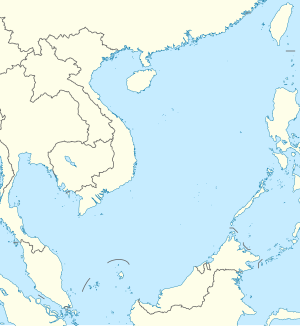
Scarborough Shoal is located in South China Sea

CHINA, THE SEA BULLY

Should we bomb the Chinese out of the Scarborough Shoal?

That would be the biggest mistake ever because it would start a huge war between the Philippines and China; between the USA and China; between Taiwan and the Philippines; between Macau and the Philippines. And hopefully we could be asssured that the Chinese in the Philippines would be siding with the Filipino people versus China.

That's hardly what we want at this time this war. We still have many hopes and dreams of living a longer life, enjoying its up and downs with our families, our significant others, our kababayan who are reeling from the many decades of misgovernance till Pres. Duterte whose pronouncements every day center on cleaning up this government. .

Now we are seeing a different world, with different perspectives of existing; that after all we could still look forward to a happy life. What is happiness? Ay, there's the great discussion.

What is happiness for the Chinese?

Actually the Chinese we are looking at do not have an ounce of the Marxist outlook of Mao Ze Dong. They are hardly communists that we would call based on our understanding of communism during the 60's. The Marxists, or Maoists then believed in communal possession of properties; of the leadership of the proletariat and the farmers and all other poor people. They believed, the Maoists, that only an armed struggle would allow them to attain that Utopia where everybody, or almost everybody is happy.

The masses of workers and farmers were iconized, idealized, so much so that during the Cultural Revolution of the 60's, the intellectuals and artists – including musical composers were made to go to the rural areas to serve them, to work and experience their sufferings with them though some of the former regretted having been sent there.

Well the treatment of the Filipino fisherfolks by the Chinese navy hardly exhibits an ounce of sympathy for the plight of the poor. Rather, the Chinese of today, those who are leading the group who have taken over the Shoal, are what are called Communist Government Bureaucrats but not Communists. Their economic policies allow for exploitation of private individuals of the resources, of establishing huge multi-billion companies that would give enough wealth to China. However, it has retained the government structure set up as Communist, minus the original tenets of the ideology. So there are plenty of leaders who rule for life, dictating what should be done economically. That is indeed very far from the democratic way of life we are now experiencing in the country.

In fact, I was reading the biography of Xi Jian Ping and discerned that the Chinese period he lived in, since 1953, when he was born, do not run parallel at all to Philippine history. Whereas our history walked the path to greater and stronger democracy (until Marcos came along who set up martial law), China went the way of chopping off the forces of liberalism through its Cultural Revolution of the 60's. And when Mao Ze Dong died after that, the capitalist forces came in which has created the quick development of the industries of China, the building of large military warfare machinery which are now being used against the Philippines in the Shoal. China is now a world power to contend with.

But the left in the country should not be deceived by the name of China who still carries the word “communist” only because it has the semblance of a communist party but in praxis it is hardly what we would call communist, especially in their treatment of the democratic student movement in Hong Kong, the Third World forces, the small fisherfolks who have a difficult time eking out a living now after the Chinese military forces grabbed that Shoal from us and have prevented any entry of foreigners in the area.

Why does wealth blind people to acquire too much wealth to the point of denying others the right to live? Did Marxism draw the Chinese to that direction? But then Vietnam is communist and yet it is giving us that high moral support, as it is a contender also in that area. The victory of the Philippines in the International Tribunal declaring that China does not have any ounce of valid ownership of the waters there has been a source of pride of us in the whole planet, except Macau and Taiwan, and of course China.

How do we solve the big panda problem? My idea is

If our position as decided upon would be upheld in any negotiations with China, we must enter into a discussion with our strong position as defined by the International Arbitration Center. Otherwise, let us gather all the countries of the world to discuss economic sanctions that could be imposed on countries that ignore, reject and dismiss resolutions, covenants, and decisions among others, that have been issued by and adhered to globally.

By doing this, we are strengthening the standing of the United Nations as the last arbiter of conflicts and therefore its acts should be respected and obeyed by signatories to the UN Convention. Wealth and power in this world need not be too glorified as to make a county blind to very humane problems as hunger, thirst, and struggles for existence itself whether internal or external to a country.

By the way, we can also have a fluvial parade around the Scarborough Shoal, with all the fishing folks and their bancas surrounding it while all the Philippine Navy ships are on standby. How is that for a colorful entry into the world politics and confronting the big sea bully?