Wednesday, July 8, 2015

WHY ART ECONOMICS


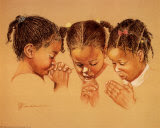
Image result for goddess of art
Apollo, lira, dan angsa.jpg


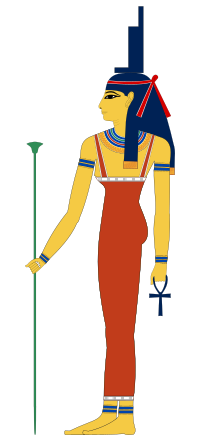
Isis.svg
ARTWORKS: Saraswati, Hindu Goddess of Art and Music; Apollo Greek God of Art ; Isis, goddess-patroness of nature and magic; "Birth of Venus" (Goddess of Art by Botticelli; 

The economic problem of Greece has made me rethink our own -- are we poor because we want to pattern our development to that of western countries? Are we poor because we are aspiring for a kind of development that has great use of machines and nuclear power as well as all kinds of industrial equipment? Maybe we are asking too much if we think that everyone should think the same. That to be rich is to acquire those so-called modern equipment, gadgets and what have you just so we could be called " mod."

I went to a Buddhist temple for about more than three years and what I learned there are meditation, how to lead an austere life, or in a nutshell, how to be satisfied with a simple lifestyle.  But that worked for the monks only because they have a friendly group that sustained their very high lifestyle -- air-conditioned rooms, vegetarian food galore, and first class office equipment. I mean people like me, who have to work in order to eat, and my writing is not really a very lucrative job, that kind of lifestyle is difficult to attain. Yet the principles and objectives of Buddhism are educational, in terms of teaching people not to look down on the poor and but rather to be kind and helpful to them and to be good to everyone, whether rich or poor. 

I mentioned my partial Buddhist experience because  the problem of Greece is akin to an individual who wants to fit into a large home with very rich roommates but he/she could not keep up with their lifestyle. The European Union lent her money but she could not pay back her debt. Why? What is the nature of the Greek mind - is she really industrial business-inclined? Our country the Philippines, should we really go that route of industrialization also?

Our people are an artistic lot. Our country is composed of 7100 islands and we are surrounded by water. Water makes us think of the womb where we came from -- safe inside our mother. Water is also a symbol for transformation. So we should accept ourselves as artists. For art transforms. 

We should think of the Philippines as an artistic destination also -- where the artists are able to exercise their skills and have a great income from them. 

Now considering that our people are more inclined towards the arts, then we should be able to live off on those talents and genius. 

But for us to work in that direction, the world has to change its attitude towards the arts and look at works of art, not those for auctions only, as valuable as paying a gross amount for a car or a cellphone. 

I think that losing our artistic urges makes us also lose our faith and spiritual ties which could make us aspire for goodness and greatness. Here in our country, the lack of artistic coherence is visible in the way worship is done in some churches. Religion puts up Mother Mary as the ideal mother yet we see women who dress up cheaply entering the church and receiving communion. Also don't you think some people become scammers or engage in nefarious activities because they fail to exercise their artistic skills and they think that being an artist is not being treated as an equal to all the other business callings; so then they turn to using their skills in some depraved ways? 
Here is a definition of artwork: "an aesthetic physical item or artistic creation. Apart from "work of art", which may be used of any work regarded as art in its widest sense, including works from literature and music, these terms apply principally to tangible, portable forms of visual art:fine art, such as a painting or jewelryinterior design and much folk art; religious artworks, photographfilm or visual computer program, such as a video game or computer animationinstallation art or conceptual art. It could also be an architectural piece, or a designed landscape; a live performance, such as theaterballetoperaperformance art, musical concert and other performing arts, and other ephemeral, non-tangible creations."

So if Greece has such a long historical background in all the different fields of endeavor, shouldn't her economic programs gear more towards the development of an arts economy -- not just as a tourist spot in Europe but as a country that values the arts and considers it as its major development program. By the way, she even has a god of art -- Apollo, and a goddess too - Aphrodite or Venus Other countries have their share like in India, Saraswati; and Isis, Egyptian goddess of nature and magic. 

But then in order for countries like Greece and ours to veer towards arts economic development, then the world also has to change its perspectives on looking at development. Art economics should be the mantra. Banks should be willing to sink in their money for artistic productions not just those businesses that produce millions of products with the same looks. 

Right now, I am dreaming of acquiring a piece of land to put up a sprawling community with three-floor buildings, with quaint design somewhere in MetroManila. The first floor will have business stores for artistic works of the owners of the unit, the second and third, their residential place. Then that community will have an agora, a circular form, with the center being a grassy land where the residents can communicate, meditate together, gather and relate with each other as friends and community members at night. 

But ask now, what and which lot in MetroManila? That would turn out to be a losing proposition because per square meter is very expensive here already. A seasoned architect said that that idea is feasible only somewhere in the rural areas. Which is true. We have built a metropolis that has become completely dependent on roads for vehicles; with places of employment very far from residences; and businesses that arise here and there without regard if a restaurant is beside a funeral parlor, or a meatshop is near a dog food store. 

Question, the way MetroManila looks now, is it an artistic landscape? Some spots are artistic but on the whole, it is very difficult to say yes. 

It is high time that we view life on this planet as diverse and in need of recognition of the differences of the inclinations of people. Maybe we could even reduce the attraction of wars as a means to attain power if we could make everyone value the work of an artist -- as art is for beauty, not destruction. Art is for goodness not ugliness; for acquisition of humanity not malevolence. A piece of art could be pleasing and shocking too but in the end it aims for the transformation of the viewer into a new humane being with ties to the living community -- the people and the environment and in the long run with the divine. 


Sunday, July 5, 2015

ON VALUING GREEK CULTURE

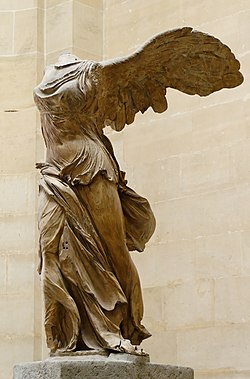
The Winged Victory of Samothrace


I sympathize very much with what is happening to Greece. The country is being asked to swallow the terms of big banks which are charging interest for the loans she has taken out in the past. Yet when we look at Greece and history, we will note that the borrowed loans are minuscule compared to the priceless contributions of her people to humanity. Just look at the clippings below -- from Sociology to Philosophy, Theatre, Medicine, Drama, Movies and Novel writing. The expanse of the Greek thoughts is mind-blowing. It is no wonder that the Greeks have maintained their dignity all throughout the economic problems they have gone through. 

I think that the economists of the world should go beyond looking at pence and pennies they are collecting from Greece. Let us ask for them to be more kind and generous as Greece is a part of everyone. In College at the University of the Philippines where I am typing this now, I learned about Greek drama -- the agora theatre where the Greeks watched the dramas unfold. I came to know Aeschylus, Sophocles and Euripides who wrote Medea, a very strong woman. And who wrote Lysistrata written by Aristophanes- where women withheld sex from their men in order to stop them from creating and going to wars? 

My sister Evangeline studied Fine Arts and there in her college were Greek statues that they studied to become sculptors themselves -- Venus in Roman or Aphrodite in Greek , Adonis, (Greek demi-god). Then I had classmates studying medicine and learned from them about the Hippocratic oath which I have clipped below. What about philosophy-- who can forget Socrates who wrote "the unexamined life is not worth living," Plato, who wrote about the philosopher-king, and Aristotle whose contributions to biology is unbeatable. "Aristotle is a towering figure in ancient Greek philosophy, making contributions to logic, metaphysics, mathematics, physics, biology, botany, ethics, politics, agriculture, medicine, dance and theatre. He was a student of Plato who in turn studied under Socrates. He was more empirically-minded than Plato or Socrates and is famous for rejecting Plato's theory of forms." (http://www.iep.utm.edu/aristotl/)

It was also in my student years that I came to see Zorba the Greek written by Nikos Kazantzakis and played by Anthony Quinn as well as Melina Mercouri who appeared in Never on Sunday. What I have learned of the Greeks is that they have joie de vivre or joy of life in French. 

In sports, did you know that Nike is the name of a Greek goddess who personified victory?


Lastly, I cannot forget the many Gods and Goddesses in Greek mythology whose lives I read in a Greek Mythology given me by my teacher in the grades atop that aratiles tree at the side of our house in Bacood. I learned about Athena (from whom Ateneo University got its name) the goddess of wisdom, of Zeus the fiery god of all the gods and goddesses of Mount Olympus (come to think of it that camera took that name from the Greeks too), Aphrodite or Venus to the Romans, the goddess of love; of Hermes or Mercury in Roman literature -- a name that that drugstore in our midst is using;  of  Poseidon or Neptune, the god of the seas, and many, many more. 

Maybe as the earth is rotating on its axis and the world of finance moves, then we should not forget the past as it impinges on our present. We are the products of the past and though some sectors have more money than us, still we cling to that dream that we can still have a very humane leadership that will value culture and history on equal terms as everything else. 


CLIPPINGS

Sociological reasoning pre-dates the foundation of the discipline. Social analysis has origins in the common stock of Western knowledge and philosophy, and has been carried out from as far back as the time of ancient Greek philosopher Plato, if not before. The origin of the survey, i.e., the collection of information from a sample of individuals, can be traced back to at least the Domesday Book in 1086,[10][11] while ancient philosophers such as Confucius wrote on the importance of social roles. There is evidence of early sociology in medieval Islam. Some consider Ibn Khaldun, a 14th-century Arab[12][13] Islamic scholar from North Africa (Tunisia), to have been the first sociologist and father of sociology (seeEarly Islamic philosophy#Branches); his Muqaddimah was perhaps the first work to advance social-scientific reasoning on social cohesion and social conflict.[14][15][16][17][18][19]
The word sociology (or "sociologie") is derived from both Latin and Greek origins. The Latin word: socius, "companion"; the suffix -logy, "the study of" from Greek -λογία from λόγοςlógos, "word", "knowledge

Western philosophy has a long history, conventionally divided into four large eras - the Ancient, Medieval, Modern, and Contemporary. The Ancient era runs through the fall of Rome and includes the Greek philosophers such as Plato and Aristotle.

    en.wikipedia.org/wiki/History_of_theatre
    The history of theatre charts the development of theatre over the past 2,500 years. While performative elements are present in every society, it is customary to ...
The Theatre of Ancient Greece, or Ancient Greek drama, is atheatrical culture that flourished in ancient Greece 700 BC. The city-state of Athens, which became a significant cultural, political, and military power during this period, was its centre, where it wasinstitutionalised as part of a festival called the Dionysia, which honoured the god Dionysus.

MEDICINE:  Hippocrates, known as the "Father of Modern Medicine",

This is the original version of the Hippocratic Oath:
I swear by Apollo the physician, and Aesculapius the surgeon, likewise Hygeia and Panacea, and call all the gods and goddesses to witness, that I will observe and keep this underwritten oath, to the utmost of my power and judgment.
I will reverence my master who taught me the art. Equally with my parents, will I allow him things necessary for his support, and will consider his sons as brothers. I will teach them my art without reward or agreement; and I will impart all my acquirement, instructions, and whatever I know, to my master's children, as to my own; and likewise to all my pupils, who shall bind and tie themselves by a professional oath, but to none else.
With regard to healing the sick, I will devise and order for them the best diet, according to my judgment and means; and I will take care that they suffer no hurt or damage.
Nor shall any man's entreaty prevail upon me to administer poison to anyone; neither will I counsel any man to do so. Moreover, I will give no sort of medicine to any pregnant woman, with a view to destroy the child.
Further, I will comport myself and use my knowledge in a godly manner.
Drama is now commonly used to refer to a genre of film or television which is more serious than comedy. An older meaning of 'drama' was the specific modeof fiction represented in performance.[1] The term comes from a Greek word meaning action (Classical Greekδρᾶμαdrama), which is derived from the verb meaning to do or to act (Classical Greekδράωdraō). 

MOVIES: Melina Mercouri (GreekΜελίνα Μερκούρη, born as Maria Amalia MercouriΜαρία Αμαλία Μερκούρη; 18 October 1920 – 6 March 1994), was a Greek actress, singer and politician.
She was born to a former cavalry officer and member of parliament,Stamatis Mercouris, and his wife Eirini Lappa. When she completed her secondary education, she attended the National Theatre's Drama School. She graduated in 1944. Her first husband was a wealthy landowner Panos Harokopos, and they stayed together until 1962 when they divorced.
As an actress she made her film debut in Stella (1955) and met international success with her performances in Never on Sunday,PhaedraTopkapi, and Promise at Dawn. She won the award forBest Actress at the 1960 Cannes Film Festival, and she was also nominated for an Academy Award, a Tony Award, three Golden Globe Awards, and two BAFTA Awards.
Zorba the greek Zorba the Greek (Greek title: Αλέξης ΖορμπάςAlexis Zorba(s)) is a 1964 British-Greek drama film directed by Cypriot Michael Cacoyannis and starring Anthony Quinn as the title character. It is based on the novel Zorba the Greek by Nikos Kazantzakis


NOVELIST Nikos Kazantzakis (GreekΝίκος Καζαντζάκης; 18 February 1883 – 26 October 1957) was a Greek writer and philosopher, celebrated for his novel Zorba the Greek, considered his magnum opus. He became known globally after the 1964 release of theMichael Cacoyannis film Zorba the Greek, based on the novel. He gained renewed fame with the 1988 Martin Scorsese adaptation of his book The Last Temptation of Christ.

*photo -  Winged Victory of Samothrace, also called the Nike of Samothrace, a 2nd-century BC marble sculpture of the Greek goddess Nike (Victory).